
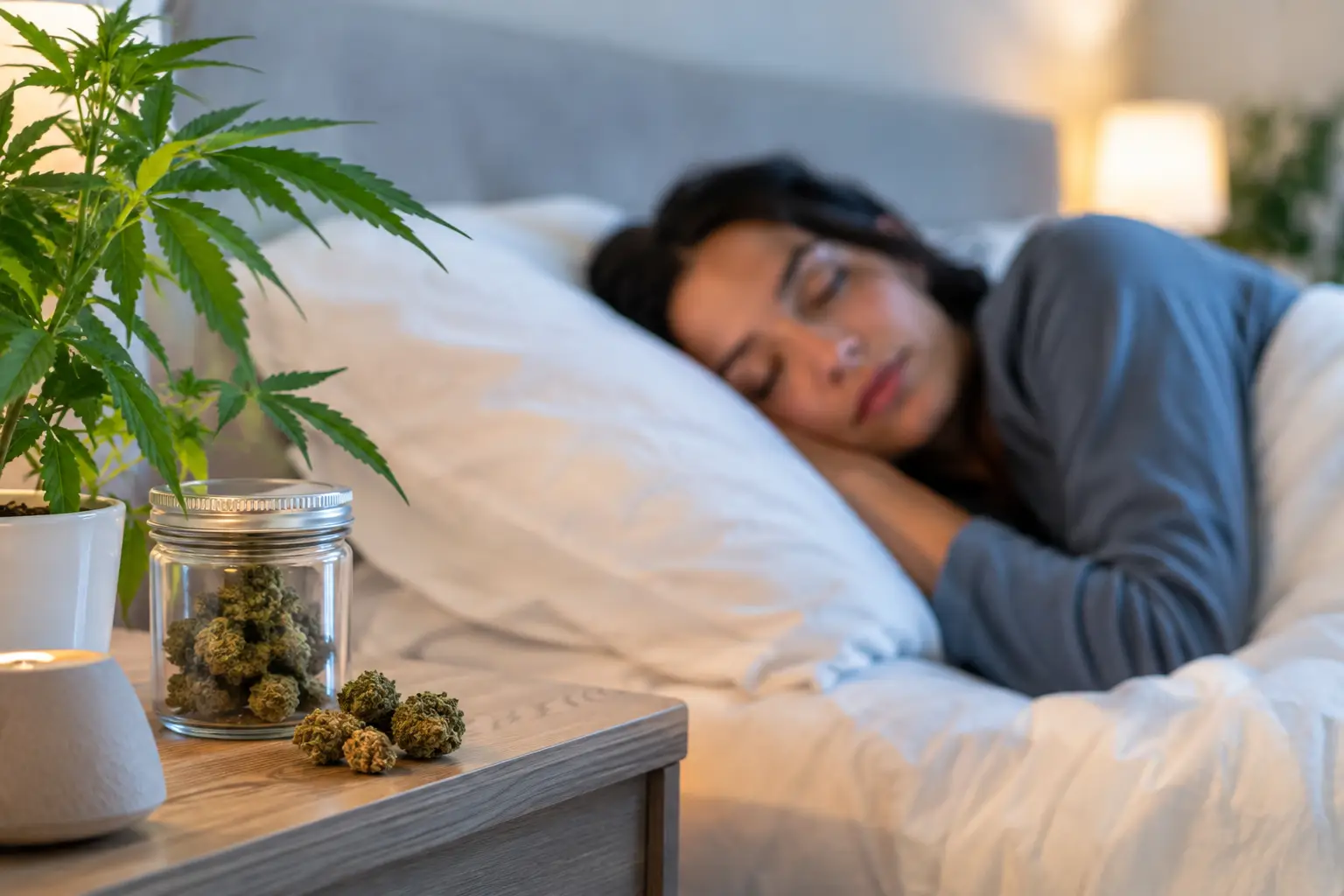
A cannabis product can make it easier to fall asleep and still leave you less restored the next morning. That distinction is at the center of the question: does cannabis affect sleep quality? For some adults, especially those dealing with pain or occasional trouble falling asleep, cannabis may provide short-term relief. But sedation is not the same thing as healthy sleep, and frequent use can change the structure of sleep in ways that matter.
The evidence is still developing. Cannabis research has long been constrained by federal restrictions, small study sizes, differing products, and the fact that dispensary labels do not always tell the full story about dose or effects. The most honest answer is that cannabis can affect sleep, but whether that effect is useful, neutral, or disruptive depends heavily on the person, product, dose, timing, and pattern of use.
Does cannabis affect sleep quality over time?
Cannabis contains more than 100 cannabinoids, though THC and CBD receive most of the attention. THC is the intoxicating compound that produces a high. CBD is non-intoxicating, but it is not automatically sedating, and its effects may vary by dose and person.
In the short term, THC can reduce the time it takes some people to fall asleep. It may also reduce nighttime awakenings for certain users, particularly when pain, nausea, or stress is part of the picture. That can feel like better sleep. Yet sleep quality includes more than how quickly someone falls asleep or how long they remain in bed.
Sleep moves through several stages, including deep non-REM sleep and rapid eye movement, or REM, sleep. REM is associated with vivid dreaming and plays a role in emotional processing and memory. THC appears to suppress REM sleep for many users, especially at higher doses. A person may dream less while using THC, but that does not necessarily mean their sleep is more restorative.
With regular use, the body can develop tolerance to some of cannabis’s sleep-related effects. A dose that initially felt reliably calming may become less effective. Some people respond by taking more or using cannabis more often, which can increase next-day grogginess, cognitive impairment, or dependence risk without solving the underlying sleep issue.
Why cannabis can help one night and hurt the next
The sleep experience often changes with frequency. An occasional low dose may help a person settle down during a stressful week. Nightly use is a different pattern, with different trade-offs.
When frequent users stop THC abruptly, they can experience withdrawal-related sleep disruption. Trouble falling asleep, vivid dreams, restless nights, and irritability are common complaints. This rebound effect is partly consistent with REM returning after ongoing suppression. It can create a frustrating cycle: cannabis is used to sleep, stopping makes sleep temporarily worse, and that rough patch is interpreted as proof that cannabis is necessary.
That does not mean every regular cannabis consumer will develop a sleep problem. It does mean that “I sleep better with it” deserves a closer look. Are you sleeping longer but waking unrefreshed? Are you needing a larger dose than before? Is sleep noticeably worse whenever you skip it? Those questions reveal more than a single good night of sleep.
Product type matters, but labels have limits
THC dose is usually more predictive than a product name such as indica, sativa, or hybrid. Those labels can be useful shorthand for shopping, but they are not dependable scientific categories for predicting sleep. Two products sold under the same category may have very different cannabinoid and terpene profiles.
High-THC flower, vape cartridges, concentrates, beverages, and edibles also behave differently. Inhaled cannabis acts quickly and generally wears off sooner. Edibles take longer to begin working, often one to four hours, and can last well into the next day. Taking an edible late at night because it has not “kicked in” yet is a common route to an unexpectedly strong dose and morning impairment.
Cannabis products that contain CBD may feel less intoxicating, but they are not a guaranteed sleep solution. Research on CBD for insomnia remains mixed and preliminary. At lower doses, CBD can feel alerting to some people. Products combining CBD and THC may alter the experience, but they do not eliminate THC-related impairment or the possibility of disrupted sleep architecture.
Dose and timing can change the outcome
More is not always more sleep-supportive. Higher THC doses are more likely to produce anxiety, racing thoughts, dizziness, rapid heart rate, or uncomfortable intoxication, all of which can work against rest. They may also make it harder to judge whether the product is helping sleep or simply making consciousness feel more distant.
If an adult chooses to use cannabis, a low dose and a consistent, earlier time in the evening are generally easier to assess than a large dose taken at bedtime. Avoid stacking products, such as vaping after taking an edible, unless you understand the total THC dose. Keep a simple record for a week or two: product, dose, timing, time to fall asleep, nighttime awakenings, wake time, and next-day alertness. That creates a clearer picture than relying on memory alone.
Who should be especially cautious?
Cannabis is not a low-risk sleep aid for everyone. Adults with a personal or family history of psychosis, bipolar disorder, or substance use disorder should speak with a qualified health professional before using THC. High-THC products can worsen anxiety or trigger paranoia in some people, even if they have used cannabis before without issue.
People with sleep apnea should be particularly careful. Snoring, gasping, witnessed breathing pauses, morning headaches, and severe daytime sleepiness call for medical evaluation, not self-treatment with cannabis. Sedating substances can complicate breathing-related sleep disorders, and cannabis is not an established treatment for sleep apnea.
Mixing cannabis with alcohol, opioids, benzodiazepines, or other sedating medications can increase impairment and may be dangerous. CBD and THC can also affect how the body processes certain prescription drugs. A pharmacist or clinician can help assess potential interactions, especially for people taking blood thinners, seizure medications, antidepressants, or sleep medications.
And cannabis should never be used before driving, operating machinery, or taking on work that requires fast reactions the next morning. Feeling awake is not the same as being unimpaired.
Better questions to ask before using cannabis for sleep
Insomnia is often a symptom rather than a standalone problem. Caffeine late in the day, irregular work hours, chronic pain, alcohol use, anxiety, depression, medication side effects, menopause symptoms, and untreated sleep apnea can all fragment sleep. Cannabis may soften a symptom while leaving the driver untouched.
Before making cannabis a nightly routine, consider whether the basic conditions for sleep are working. Keep a consistent wake time most days, get daylight exposure early, limit late caffeine, and make the bedroom cool and dark. If trouble sleeping lasts for months or affects daytime functioning, cognitive behavioral therapy for insomnia is a well-supported first-line approach that does not carry intoxication or withdrawal risk.
For adults 21 and older who still choose cannabis, start low and go slow. Choose regulated products when available, read the label for total THC per serving, and store products securely away from children and pets. State cannabis laws vary, and hemp-derived THC products are not automatically legal or equivalent to state-regulated cannabis.
A good night’s sleep is more than being knocked out. If cannabis leaves you calmer, functional, and genuinely rested without escalating use, it may have a limited role for you. If it starts to feel required for sleep, produces hazy mornings, or makes nights worse when you skip it, that is a useful signal to step back and address sleep from a wider angle.