
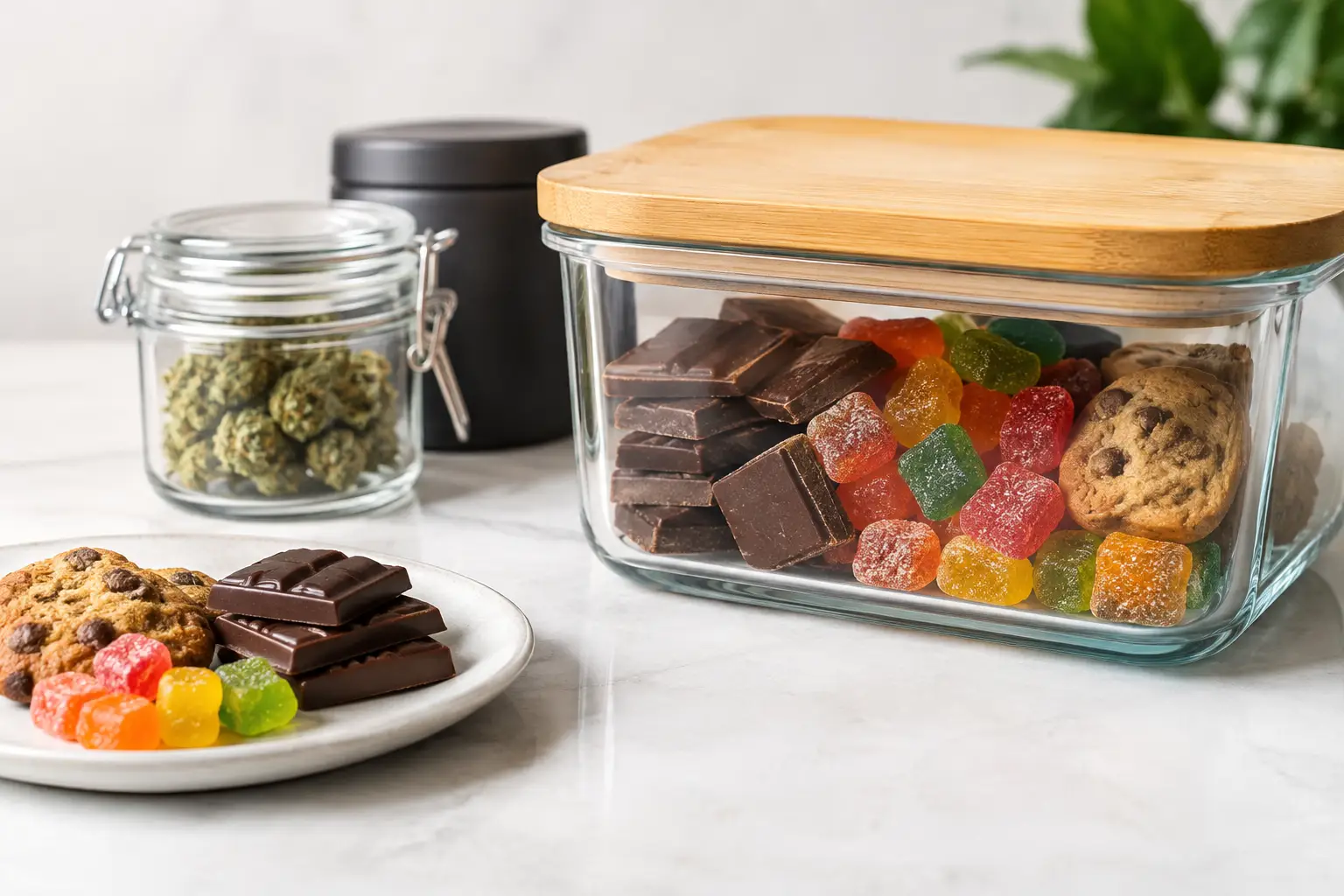
A gummy left on a sunny counter can turn sticky, melt into its packaging, and become much harder to dose accurately. A brownie stored like an ordinary snack can spoil before its labeled cannabinoid content has meaningfully changed. Learning how to store cannabis edibles is partly about preserving flavor and texture, but it is also a safety practice: keep products clearly identified, inaccessible to children and pets, and separate from everyday food.
For adults 21 and older in jurisdictions where cannabis is legal, the basic rule is simple: follow the package first, then protect the product from heat, light, moisture, and unauthorized access. The details change with the edible itself.
How to Store Cannabis Edibles: Start With the Label
A licensed product's label is the best first source for storage instructions and expiration or best-by dates. Manufacturers formulate gummies, chocolates, beverages, baked goods, capsules, and infused oils differently. Some use preservatives or shelf-stable ingredients; others require refrigeration after opening.
Look for directions such as "store in a cool, dry place," "refrigerate after opening," or "keep frozen." Also check whether the stated date applies to an unopened package, an opened product, or both. If package instructions conflict with general advice, use the manufacturer’s directions.
The label also helps preserve dosing clarity. Keep the original package whenever possible, especially if it lists milligrams of THC, CBD, or other cannabinoids per serving and per package. Moving edibles into an unlabeled jar may seem tidy, but it removes the information that helps prevent an accidental high or a larger-than-intended dose.
Choose Cool, Dark, and Dry Storage
Heat is the most common enemy of cannabis edibles. It can melt chocolate, soften gummies, separate infused oils, and degrade a product’s eating quality. Over time, heat and light may also contribute to cannabinoid degradation. That does not mean a single warm afternoon makes every product unusable, but repeated exposure is a poor storage strategy.
For shelf-stable edibles, a closed kitchen cabinet or pantry is often a better choice than a counter. Pick a spot away from the stove, dishwasher, window, radiator, and any appliance that throws off heat. A cool bedroom closet may be more stable than a kitchen cabinet in a small, warm apartment.
Moisture deserves equal attention. Humidity can make gummies sweat or stick together, while dry air can harden baked goods. Do not store products in a damp basement, bathroom cabinet, or refrigerator door, where temperature shifts and condensation are more likely.
When Refrigeration Makes Sense
Refrigeration is useful for products that contain perishable ingredients, including many homemade baked goods, refrigerated drinks, dairy-based items, and some infused butters or sauces. It can also help chocolate and gummies hold their shape in a hot climate. The trade-off is texture: cold chocolate may develop a pale surface bloom, and gummies can become firm or attract condensation when repeatedly taken in and out of the refrigerator.
If you refrigerate an edible, keep it in a sealed, child-resistant container or its tightly closed original package. Let a cold product come closer to room temperature before opening it if condensation is a concern. For foods with eggs, dairy, fruit fillings, or other perishable ingredients, use the same food-safety judgment you would use for a non-infused version.
Freezing Is Best for Longer Storage, Not Everything
Freezing can extend the usable life of many baked goods and some gummies, particularly when you have more than you expect to consume before freshness declines. Wrap items well and place them in an airtight, clearly labeled container. Freezing will not improve a product that was already stale or spoiled, and it can affect texture after thawing.
Avoid repeatedly thawing and refreezing food-based edibles. Portioning before freezing makes that easier. If you make homemade infused cookies, for example, freeze a small number in each labeled container rather than opening one large bag over and over.
Keep Edibles in Their Original, Child-Resistant Packaging
Cannabis packaging can be inconvenient, but it serves a real purpose. Original containers often limit air exposure, block some light, and include required potency and warning information. More importantly, many are child-resistant.
A child-resistant package is not childproof. Store edibles in a locked box, locked cabinet, or another secured location that children, teens, visitors, and pets cannot access. Keep the key or combination separate. This matters even when an edible looks unmistakably cannabis-related to you. Gummies, cookies, chocolates, and sodas can be especially appealing to a child or animal.
Do not place cannabis edibles in a common candy bowl, lunchbox, refrigerator snack drawer, or container that once held ordinary treats. Avoid packaging that resembles non-infused food whenever possible. If you must transfer a product because the original package is damaged, use a clearly marked, child-resistant container and include the product name, cannabinoid content, purchase date, and any storage directions.
Separate Cannabis From Everyday Food
Separation reduces two kinds of mistakes: accidental ingestion and dosing confusion. A dedicated locked storage bin is a practical option for shelf-stable products. In the refrigerator or freezer, use an opaque, labeled container placed on a high or otherwise secured shelf, not beside family snacks.
This is particularly relevant for homemade edibles. Homemade products may not distribute THC evenly unless they were prepared with care, and their potency can be difficult to verify. Label them with the date made, ingredients, and an estimated milligram amount per portion only if you have a defensible calculation. If you do not know the dose, do not present it as certain.
For anyone consuming edibles, the familiar harm-reduction guidance still applies: start low and go slow. Effects can take one to several hours to fully develop, depending on the product and the person. Proper storage cannot solve dosing uncertainty, but it can prevent someone from grabbing an unknown edible and making a risky guess.
Watch for Spoilage, Damage, and Product Changes
Cannabinoids are only one part of the equation. Edibles are food, and food can spoil. Discard an item with visible mold, an off odor, leaking packaging, unusual discoloration, or a flavor that signals rancidity or spoilage. Do not rely on a product’s THC content or packaging date to override clear food-safety warning signs.
A melted gummy or softened chocolate is not automatically unsafe, but assess the package and storage history. If it was exposed to heat briefly while sealed, it may simply have a texture problem. If it sat for days in a hot car, leaked, developed condensation, or became difficult to identify or portion, disposal is often the safer call.
Be cautious with products past their best-by date. That date is generally more useful for expected quality than a guarantee of safety, especially for shelf-stable items. With refrigerated or homemade products, the margin is narrower. When you are uncertain, do not consume it.
A Storage Routine That Actually Holds Up
The most effective system is usually the least complicated one. After purchase, check the label, write the opening date on the package if relevant, and place the edible in its appropriate secured location. Keep a small inventory if your household has several product types, especially products with different strengths.
Before travel, check the law where you are and where you are going. Cannabis remains illegal under federal law, and crossing state lines with cannabis products can create legal risk even between states that allow adult-use cannabis. Store products securely while in a vehicle, but do not assume secure storage changes the law.
A good edible should remain easy to identify, accurately portion, and difficult for anyone else to access. That standard protects the product, the people around it, and the judgment that responsible cannabis use requires.