
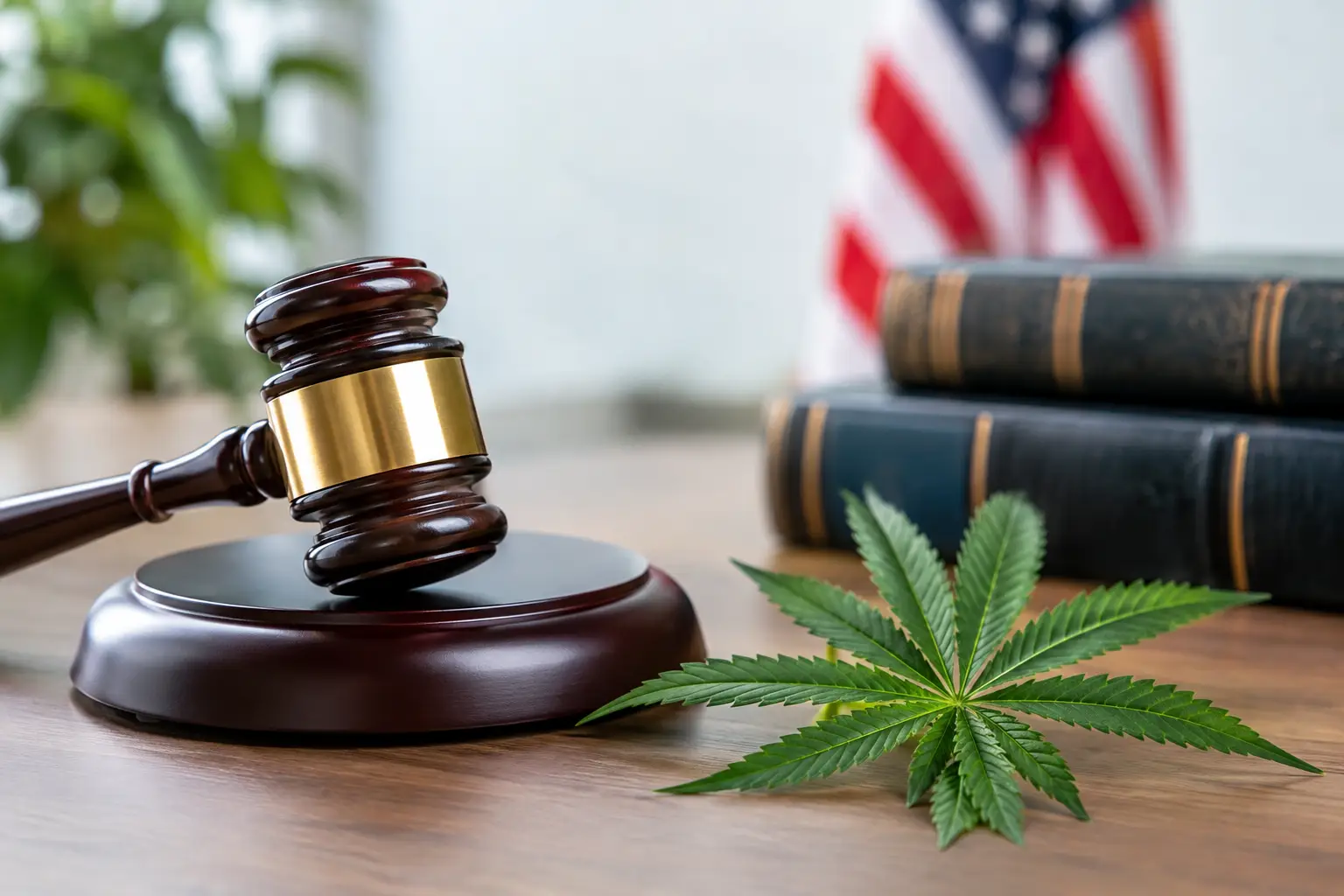
A cannabis purchase may be legal at a licensed dispensary, yet the same product can create a different legal question the moment it crosses a state line, enters a federal building, or involves a bank. That tension is the central fact of cannabis and federal law in the United States: state legalization has expanded dramatically, but federal rules still set major limits on commerce, research, employment, and enforcement.
For adults 21 and older, the practical lesson is simple: legal in your state does not automatically mean legal everywhere. For patients and businesses, the stakes can be higher. A state medical card, a compliant dispensary license, or a hemp label does not by itself answer every federal question.
The federal baseline: the Controlled Substances Act
The Controlled Substances Act, or CSA, is the federal statute that classifies controlled drugs into schedules. For decades, marijuana has been listed in Schedule I, the category reserved under federal law for substances deemed to have a high potential for abuse and no currently accepted medical use at the federal level. That classification has consequences far beyond simple possession.
Schedule I status has historically made scientific research more difficult, complicated access to banking, and limited ordinary tax deductions for state-legal cannabis businesses. It also means that state legalization does not repeal federal prohibitions on manufacturing, distributing, dispensing, or possessing marijuana, except within narrow federally authorized research and regulatory contexts.
Federal scheduling policy has been under active review, including a proposal to move marijuana to Schedule III. A proposal, public comment period, hearing, or agency statement is not the same as a final legal change. Before relying on a headline about rescheduling, check whether a final rule has been published and whether court challenges or implementation rules affect it. Even a move to another schedule would not equal federal legalization. Cannabis would remain federally controlled, and state-licensed marijuana sales would not automatically become federally authorized.
Why state legalization does not settle the issue
States can remove or reduce penalties under their own laws and create regulated programs for adult-use or medical cannabis. They cannot require the federal government to change its statute. This creates a federal-state split that can feel abstract until it affects a real decision.
A state may allow an adult to possess a defined amount of cannabis at home or buy it from a licensed retailer. Federal law can still matter on federal property, in federal housing, at national parks, at airports, and in transactions that cross state or international borders. Transporting cannabis from one legal state to another is interstate commerce, even if both states permit adult-use sales.
The same distinction applies to medical cannabis. A doctor or other authorized clinician may discuss cannabis and, in some states, certify a patient for a medical program. But a state medical recommendation is not a federally recognized prescription for dispensary cannabis. It also does not create a universal exemption from workplace rules, firearm restrictions, immigration consequences, or federal agency policies.
Enforcement priorities can shift from one administration to another. That does not erase the underlying statute. Adults should avoid treating low enforcement risk as a legal right, particularly when travel, federal benefits, professional licenses, or child-custody matters are involved.
What federal law means in everyday situations
For most consumers, the biggest risks are not dramatic raids. They are routine decisions made under the assumption that state legality travels with them. It does not.
Cannabis should not be taken across state lines, mailed through the U.S. Postal Service, or carried into a federal courthouse, military installation, national park, or other federal facility. Airline travel can be especially confusing. Airport security procedures, airline policies, local rules, and federal aviation jurisdiction do not line up neatly. A product permitted in the departure state may still create trouble during screening or after landing.
Employment is similarly fact-specific. Some states protect certain lawful off-duty cannabis use or restrict pre-employment testing. Those protections often include exceptions for safety-sensitive jobs, federal contractors, transportation roles, or work regulated by federal agencies. A positive drug test can still carry serious consequences, especially where federal testing standards apply.
Firearm law is another area where state and federal rules can conflict. Federal law has long restricted firearm possession for people who are unlawful users of, or addicted to, controlled substances. Because marijuana has been federally controlled, cannabis use may raise federal firearm-law issues even in states with legal dispensaries. Litigation and policy developments may change the boundaries of that rule, but it is not an area for assumptions.
Cannabis banking, taxes, and the business gap
A state-legal cannabis operator can follow detailed rules on licensing, testing, seed-to-sale tracking, packaging, and age verification, then still face barriers that other retail businesses do not. Federal prohibition has made many financial institutions cautious about serving marijuana-related companies, although some banks and credit unions do provide carefully monitored accounts.
The issue is not merely whether a business can open a checking account. It affects payment processing, lending, insurance, payroll, leases, and the basic ability to move money without relying heavily on cash. Federal anti-money-laundering rules require financial institutions to assess risk and file reports in certain circumstances, which makes cannabis compliance resource-intensive.
Tax treatment has also been unusually restrictive. Internal Revenue Code Section 280E disallows ordinary business deductions and credits for businesses trafficking in Schedule I or Schedule II controlled substances. That can leave a profitable-looking company with a disproportionately high effective tax bill. A final shift in federal scheduling could alter the 280E analysis, but it would not solve every banking, licensing, or interstate-commerce problem overnight.
For consumers, this business gap can show up as cash-only policies, higher prices, limited access in rural areas, or uneven product availability. Those are not always signs that a dispensary is operating outside state law. They can be symptoms of a market still operating under conflicting legal systems.
Hemp is federally defined, but not a free pass
The 2018 Farm Bill removed hemp from the CSA definition of marijuana when it contains no more than 0.3% delta-9 THC on a dry-weight basis. That change created a national hemp market, but it did not create a single, uncomplicated legal category for every product sold as hemp.
A hemp product can comply with the federal delta-9 THC threshold and still raise questions about manufacturing, labeling, food and dietary-supplement rules, consumer safety, or state restrictions. Intoxicating hemp-derived products, including some delta-8 THC and high-dose hemp-derived delta-9 products, sit in an especially unsettled space. States have responded very differently: some regulate these items like cannabis, some limit them, and some permit sales under narrower rules.
The Food and Drug Administration also plays a separate role. The FDA has approved one prescription cannabinoid medicine for specific seizure disorders, but that does not mean the agency has approved CBD, delta-8 THC, or dispensary cannabis products as general treatments. Marketing claims that a cannabinoid cures, treats, or prevents disease deserve extra scrutiny unless supported by high-quality clinical evidence and lawful product labeling.
Consumers should read certificates of analysis carefully, but not treat them as magic paperwork. A lab report may tell you about particular cannabinoids or contaminants in a tested batch. It does not, by itself, prove that a product is lawful in your state, accurately marketed, or appropriate for your health situation.
Research, medicine, and what rescheduling can change
Federal classification shapes the research pipeline. Researchers working with controlled substances may need registrations, security measures, institutional review, and approved sourcing. Those requirements can slow studies and limit the range of products researchers can examine.
That matters because cannabis research is not one question. THC, CBD, minor cannabinoids, terpenes, delivery methods, dose, frequency of use, and a person's age or health history can all change the outcome. Evidence is stronger for some uses than others, and promising early findings are not proof of a treatment.
A scheduling change could make some research and administrative processes easier. It would not turn every cannabis product into FDA-approved medicine, establish a universal dose, or make cannabis risk-free. High-THC products can impair driving and decision-making, and frequent use may be particularly risky for adolescents, people who are pregnant or breastfeeding, and people with a personal or family history of psychosis. If you choose to use cannabis, start low and go slow, avoid mixing it with alcohol or other impairing substances, and store all products away from children and pets.
Reading cannabis policy without getting misled
Cannabis policy news often compresses several distinct events into one dramatic headline. A bill introduced in Congress, a committee vote, an agency proposal, a final regulation, a court ruling, and a state ballot measure each mean very different things. The useful question is: what changed today, who does it apply to, and when does it actually take effect?
For now, treat federal law as an active part of any cannabis decision, not background noise. Check your state and local rules before buying or carrying a product, keep cannabis out of interstate travel, and get individualized legal or medical guidance when the consequences are significant. The law is evolving, but careful choices do not need to wait for it to become simpler.