
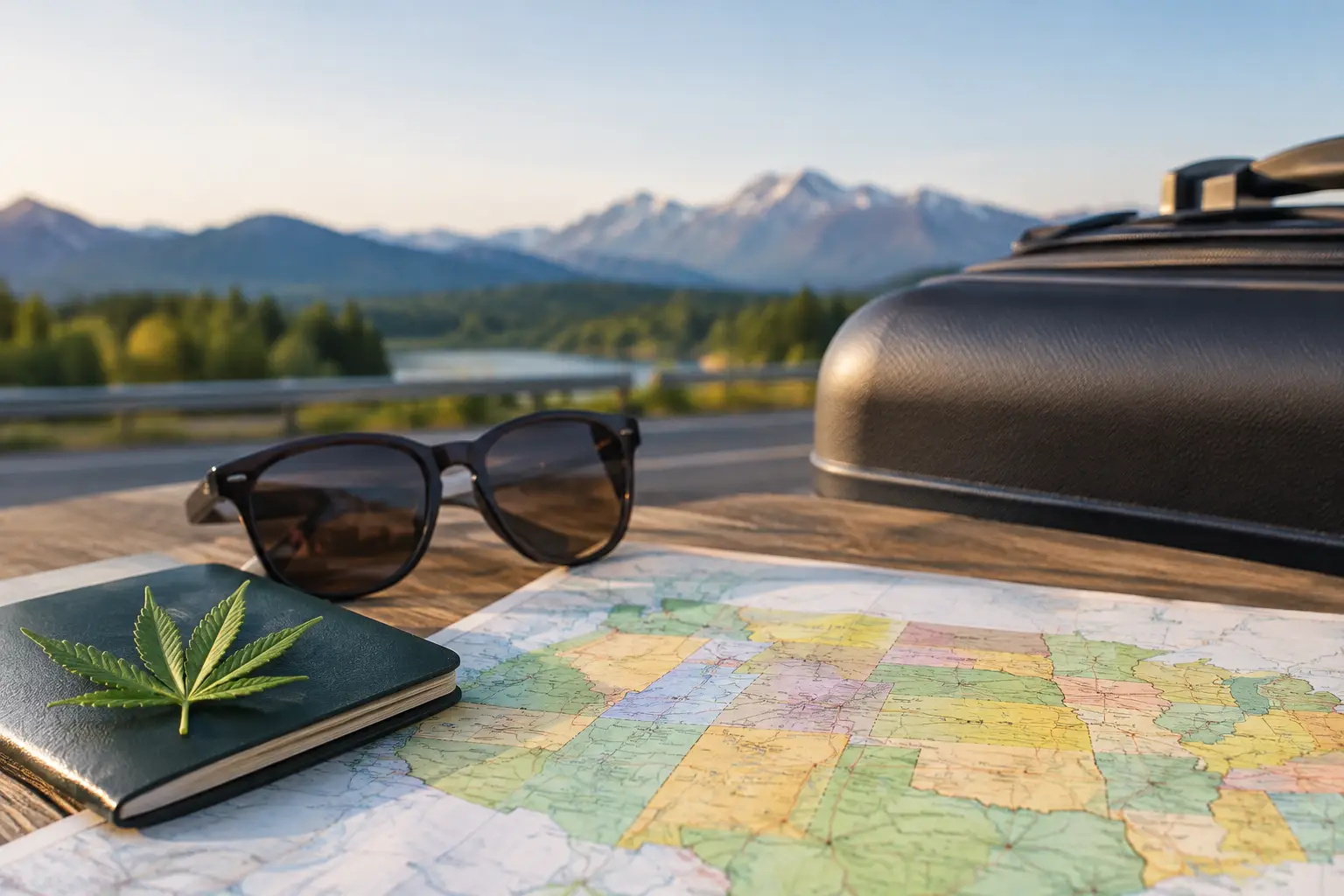
A cannabis product can be legal to buy at a licensed dispensary in one state and lead to criminal penalties a few miles away. That is the practical reality behind cannabis laws by state: legality is not one national rule, but a patchwork of voter initiatives, state statutes, agency regulations, local ordinances, and federal restrictions.
For adults 21 and older, the question is rarely just, “Is cannabis legal here?” The useful questions are more specific: Is adult-use possession allowed? Does the state recognize medical cards? Can you grow plants at home? Are high-THC hemp products regulated differently? Can you bring cannabis across the state line? The answer can change the way you shop, travel, work, or seek care.
Cannabis Laws by State: The Four Main Models
Most state cannabis frameworks fall into four broad categories, though the details matter more than the label.
Adult-use states allow adults, generally age 21 and older, to possess cannabis under state law and purchase it through licensed retailers. Many also permit medical programs. Legal sales do not necessarily mean broad freedoms: limits on possession, public consumption, home cultivation, and where dispensaries may operate still apply.
Medical-only states permit cannabis for qualifying patients who receive a recommendation or certification through the state program. Conditions, possession limits, product formats, and access rules vary widely. Some programs are built around dispensaries; others are tightly limited to low-THC preparations, specific conditions, or a narrow list of products.
Low-THC or limited-access states may allow certain cannabis-derived products for registered patients while continuing to prohibit most adult-use cannabis. These laws can be easy to misunderstand because “medical cannabis” does not always mean that flower, edibles, or retail dispensaries are legal.
Prohibition states generally do not authorize a comprehensive adult-use or medical market. Even there, enforcement priorities, local policies, decriminalization measures, and hemp-product rules can create a more complicated picture than a simple legal-illegal label suggests.
A separate category also exists in practice: states that have legalized possession or approved a program but are still building rules, issuing licenses, or opening retail stores. A ballot measure or signed bill is not the same thing as an operational market.
Legal Possession Is Not the Same as Legal Purchase
In an adult-use state, possession limits often distinguish between cannabis flower, concentrates, and infused products. A person may be allowed to hold a certain amount of flower but a much smaller amount of concentrate because concentrates contain more THC by weight. State rules may also set limits for products stored at home.
Purchase limits can differ from possession limits. Dispensaries track sales under state rules, and products must generally come from licensed businesses. Buying from an unlicensed seller can remain illegal even when adult possession is lawful.
Public consumption is another frequent point of confusion. Smoking or vaping cannabis on a sidewalk, in a park, in a vehicle, or inside many rental properties can trigger penalties. Some jurisdictions license consumption lounges, but those venues are the exception rather than the default. Cannabis use is usually restricted to private property where it is allowed by the owner.
Local governments can add another layer. A state may permit adult-use cannabis while a city or county limits dispensaries, prohibits certain business licenses, or imposes rules on consumption and home growing. State legalization does not guarantee a dispensary near every resident.
Medical Programs Can Offer Different Rights and Limits
Medical cannabis programs are not simply adult-use markets with lower prices. They may offer higher purchase limits, reduced taxes, access for patients under 21, a broader selection of products, or protections related to certain forms of possession. None of those benefits is universal.
Patients should also understand that a medical card is a state credential, not a federal authorization. It may not be recognized in another state, and it does not permit cannabis use on federal property, at airports, or across state lines. Some states offer reciprocity, meaning they extend limited access or legal protections to visiting patients, but reciprocity rules vary and can change.
For people considering cannabis for symptoms or wellness goals, state eligibility is not proof that a product will work for a particular condition. Research on cannabis and cannabinoids is uneven. Evidence is stronger for some uses than others, while dosage, THC-to-CBD ratios, interactions with medications, and individual risk factors deserve clinical attention.
Home Growing Is One of the Biggest State-Level Differences
Home cultivation often produces the widest gap between what residents assume and what their law permits. Some adult-use states allow a limited number of plants per adult or household. Others allow cultivation only for registered medical patients. Some prohibit home growing entirely, even while allowing licensed retail sales.
Where home growing is permitted, the law may require plants to be kept out of public view, secured from minors, and grown only at a primary residence. Household plant caps can be lower than the total number a group of adults might expect. Landlords, homeowners associations, and local fire or building rules may also restrict cultivation.
Growing cannabis in a state where it is authorized does not eliminate federal risk, and transporting homegrown cannabis across a state border remains unlawful. Treat home-grow rules as a separate topic to verify, not an automatic feature of legalization.
Travel, Cars, and Federal Land: Where State Law Stops
Crossing a state line with cannabis is federally illegal, including travel between two states where adult-use cannabis is legal. That applies to cannabis flower, vapes, edibles, concentrates, and, in many circumstances, cannabis products purchased with a medical card. Interstate travel turns a state-regulated activity into a federal issue.
Driving while impaired is illegal in every state. Cannabis can affect reaction time, attention, coordination, and judgment, and impairment can occur even when a person does not feel dramatically intoxicated. Keep products sealed and inaccessible to the driver when transporting them as permitted by state law. Never consume in a vehicle, and do not rely on a fixed waiting period to decide whether you are safe to drive.
Federal property is another boundary people overlook. National parks, national forests, military bases, federal courthouses, and many other federally controlled spaces follow federal law. A legal product in your hotel room or private residence may be prohibited once you step onto federal land.
Hemp-Derived THC Is Not a Simple Loophole
Hemp and marijuana are treated differently under federal definitions, but that distinction has generated a fast-moving market for products containing delta-8 THC, hemp-derived delta-9 THC, THCA, and other intoxicating cannabinoids. Federal hemp law focuses on delta-9 THC concentration by dry weight, not on whether a finished product can cause intoxication.
States have responded in sharply different ways. Some regulate intoxicating hemp products through cannabis-style testing, age gates, serving-size limits, licensing, or dispensary-only sales. Others ban specific compounds or leave products in a lightly regulated retail environment. Labels can be confusing, and product quality is inconsistent where oversight is weak.
Consumers should look for a current certificate of analysis from an independent laboratory, but a lab report alone does not establish legality or safety. It may not reflect the final product, every contaminant, or the rules in your state. For edibles, start low and go slow. Effects can take much longer to appear than inhaled cannabis, and taking more too early is a common cause of unpleasant experiences.
Employment, Housing, and Family Law Can Change the Stakes
Legal cannabis use does not create a universal right to use cannabis at work or to pass an employer drug test. Some states protect lawful off-duty use or restrict certain testing practices, while others give employers broad discretion. Safety-sensitive jobs, federal contractors, transportation roles, and positions governed by federal rules can involve stricter standards.
Housing can be similarly fact-specific. Property owners may prohibit smoking, vaping, cultivation, or cannabis possession on their premises. In federally assisted housing, federal restrictions can be especially relevant. Parents and caregivers should also recognize that cannabis can be scrutinized in family-law matters when it affects child safety, storage, impairment, or compliance with court orders.
Store all cannabis products, especially edibles that resemble ordinary candy or baked goods, in child-resistant packaging and a locked location. Keep them away from pets as well. Accidental ingestion is a preventable risk.
How to Check Your State’s Rules Without Guessing
Because cannabis policy moves quickly, a headline, social post, or dispensary advertisement may be incomplete. Start with the state agency that oversees cannabis, often a health department, cannabis control commission, or alcohol and cannabis regulator. Check the current rules for age, possession, purchase, cultivation, medical registration, and public use.
Then check the city or county where you live or plan to visit. This is particularly useful for dispensary availability, local consumption restrictions, and home-grow rules. If your question involves an arrest, employment dispute, professional license, custody issue, immigration status, firearms, or a federal benefit, get advice from a qualified attorney in the relevant jurisdiction.
Cannabis policy is moving toward greater normalization in many places, but the map still has hard borders. Before you buy, carry, grow, or travel with cannabis, confirm the rules where you are standing - not the rules you remember from the last state you visited.