
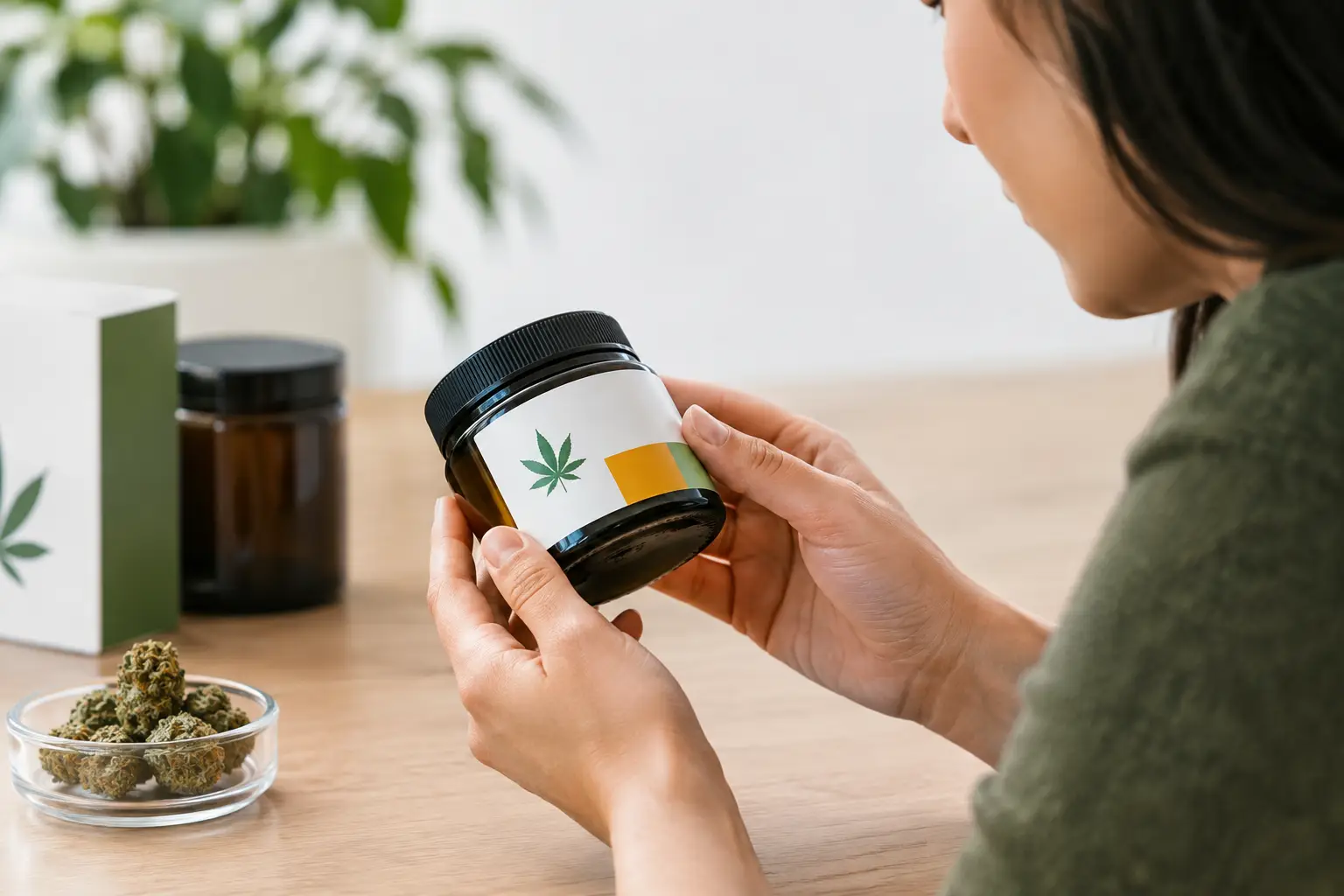
A cannabis label can look like a chemistry worksheet, a nutrition panel, and a legal notice packed onto one small package. The useful part is that once you know how to read cannabis labels, you can compare products on more than a flashy strain name or a single high THC number.
For adults 21 and older, the label is the best starting point for choosing a product that fits the intended experience, tolerance, and route of use. It can also reveal whether a product is fresh, how much to take, where it was tested, and whether the package meets your state's rules. Labels vary by state and product type, but the core information is often similar.
Start With the Product Type and Net Contents
First, identify what is actually in the package. Flower, pre-rolls, vape cartridges, concentrates, tinctures, gummies, beverages, and topicals are not interchangeable. The same cannabinoid amount can feel very different depending on whether it is inhaled, swallowed, or applied to the skin.
Look for net weight or volume near the front or side panel. Flower is usually listed in grams, while beverages and tinctures may be measured in milliliters. Edibles should show both the total amount in the package and the amount per serving. A bag with 100 milligrams of THC is not necessarily a 100-milligram dose. In many regulated markets, it contains ten separate 10-milligram servings.
That distinction matters most with edibles. Effects can take 30 minutes to two hours or longer to fully arrive, depending on the product, food intake, and individual metabolism. For people with little or no THC experience, 2.5 to 5 milligrams is often a more cautious starting point than a full 10-milligram serving. Start low, go slow, and wait before taking more.
Read THC and CBD as Milligrams, Not Just Percentages
THC, short for delta-9-tetrahydrocannabinol, is the primary intoxicating cannabinoid in cannabis. CBD, or cannabidiol, is non-intoxicating, though it can still affect the body and may interact with some medications. A label may list additional cannabinoids, including CBG, CBN, THCV, or CBC.
For flower and inhalable products, potency commonly appears as a percentage. Flower labeled 22% THC means roughly 22% of its weight tested as THC. That can help with broad comparison, but it is not a promise that the product will feel twice as strong as a 11% product. Dose size, inhalation technique, tolerance, terpene content, and personal biology all matter.
For edibles, drinks, tinctures, and capsules, milligrams are generally more useful than percentages. Check these two figures separately: milligrams per serving and milligrams per package. A tincture might contain 300 milligrams of CBD in the bottle but only 10 milligrams per dropper. A gummy may contain 5 milligrams of THC and 25 milligrams of CBD per piece.
If a label uses terms such as “total THC” or “total CBD,” it may be accounting for both the active cannabinoid and its acidic precursor. Raw cannabis contains THCA, which becomes THC when heated through smoking, vaping, or decarboxylation. This is why the THC listed for flower may include potential THC after heating. The calculation methods and terminology can differ between state programs, so compare like with like when possible.
What Terpenes Can Tell You, and What They Cannot
Terpenes are aromatic compounds found in cannabis and many other plants. They contribute to scents and flavors such as citrus, pine, pepper, floral notes, or earthiness. Common label entries include myrcene, limonene, caryophyllene, linalool, and pinene.
Terpene information can be useful if you know that you enjoy a particular aroma or want to avoid one. For example, someone who dislikes peppery cannabis may choose a product with less beta-caryophyllene. But terpene names should not be treated as a guaranteed effects menu. Research into how cannabis compounds interact is ongoing, and evidence does not support simple claims that one terpene will reliably produce a specific mood or medical outcome for everyone.
The same caution applies to strain labels. “Indica,” “sativa,” and “hybrid” are familiar retail categories, but they are imperfect shortcuts for predicting effects. A product's tested cannabinoid and terpene profile, your dose, and your own response are usually more informative than the strain category alone.
Find the Batch Number, Test Date, and Expiration Date
A regulated cannabis package should identify its batch or lot number. This number connects the product to a specific production run and its laboratory results. If there is ever a recall, the batch number is what regulators and retailers use to identify affected products.
The packaged-on date and expiration or best-by date also deserve attention. Cannabis does not become instantly unusable on a printed date, but age can reduce flavor, aroma, and cannabinoid quality. Flower stored with excessive heat, light, or air may dry out and lose much of its character. Vape oils and edibles also degrade over time.
A recent lab test date is helpful, particularly for products marketed around a detailed cannabinoid or terpene profile. If the package has a QR code, it may lead to a certificate of analysis, often called a COA. That report should correspond to the exact batch number on the package, not simply a generic report for the brand.
How to Read a Cannabis Certificate of Analysis
A COA is a laboratory report, not marketing copy. It can provide a clearer picture of what was tested and whether the product passed required safety screens. The exact testing requirements depend on the state, but a credible report commonly covers potency and may include contaminants such as pesticides, heavy metals, residual solvents, microbial contamination, mycotoxins, or foreign material.
When reviewing a COA, confirm the product name, batch number, laboratory name, sample date, and test date. Then look for a pass or fail result for the relevant panels. A result marked “ND” usually means not detected above the laboratory's reporting limit. It does not always mean a substance is absent at every possible trace level.
One practical limitation: a COA reflects the sample sent to the lab, not every molecule in every item on a shelf. Still, batch-specific testing is a meaningful consumer protection and a reason to be cautious about products without transparent sourcing or required state labeling.
Do Not Skip the Ingredients and Allergen Statement
Ingredients matter most for edibles, beverages, tinctures, and topicals. A cannabis-infused chocolate may contain dairy, soy, nuts, or other common allergens. Gummies can contain gelatin, artificial colors, added sugar, or flavoring agents that may affect a purchasing decision.
For vape products, read the ingredient list carefully. Cannabis extract and cannabis-derived terpenes are different from a vague blend of additives. Avoid products with unclear ingredient disclosures or packaging that does not identify the source and type of extract. Labels cannot eliminate every risk associated with inhaling cannabis, but transparent information gives you a better basis for comparison.
Pay Attention to Warnings, Storage, and State Symbols
Warning language can seem repetitive, but it often contains the most actionable information on the package. Common statements address impairment, delayed edible effects, pregnancy and breastfeeding, age restrictions, and keeping cannabis away from children and pets. THC products can impair driving and other activities requiring attention. Do not drive while impaired, and do not leave products in a vehicle or within easy reach of children.
Many states require a universal cannabis symbol, sometimes stamped directly onto each edible serving. State-specific symbols, serving limits, and warning language are part of a larger regulatory system, so a package that looks compliant in one state may not meet requirements in another. Cannabis remains illegal under federal law, and taking marijuana across state lines can create legal risk, even between two states with adult-use programs.
Storage instructions are worth following. Keep products in their original child-resistant packaging, stored cool, dry, and away from direct light. Edibles should be especially secure because they can resemble ordinary candy or snacks.
A Better Way to Compare Two Products
When choosing between products, avoid starting and ending with the largest THC number. Compare the product type, amount of THC per intended dose, CBD ratio if relevant, tested batch information, ingredients, and package date. Then consider price per milligram or per gram only after you know the products are genuinely comparable.
A lower-THC flower product with a fresh package date and an aroma profile you enjoy may be a better fit than older flower labeled at a higher percentage. Likewise, a 2.5-milligram edible can be more useful for controlled dosing than a 10-milligram option, even if the larger dose looks like a better deal.
Cannabis labels cannot predict your exact experience, and they are not medical advice. But reading them closely turns a purchase from a guess into an informed decision. Keep a simple note of the dose, product, batch, and how you felt afterward. Over time, that personal record may teach you more than any strain name on the shelf.