
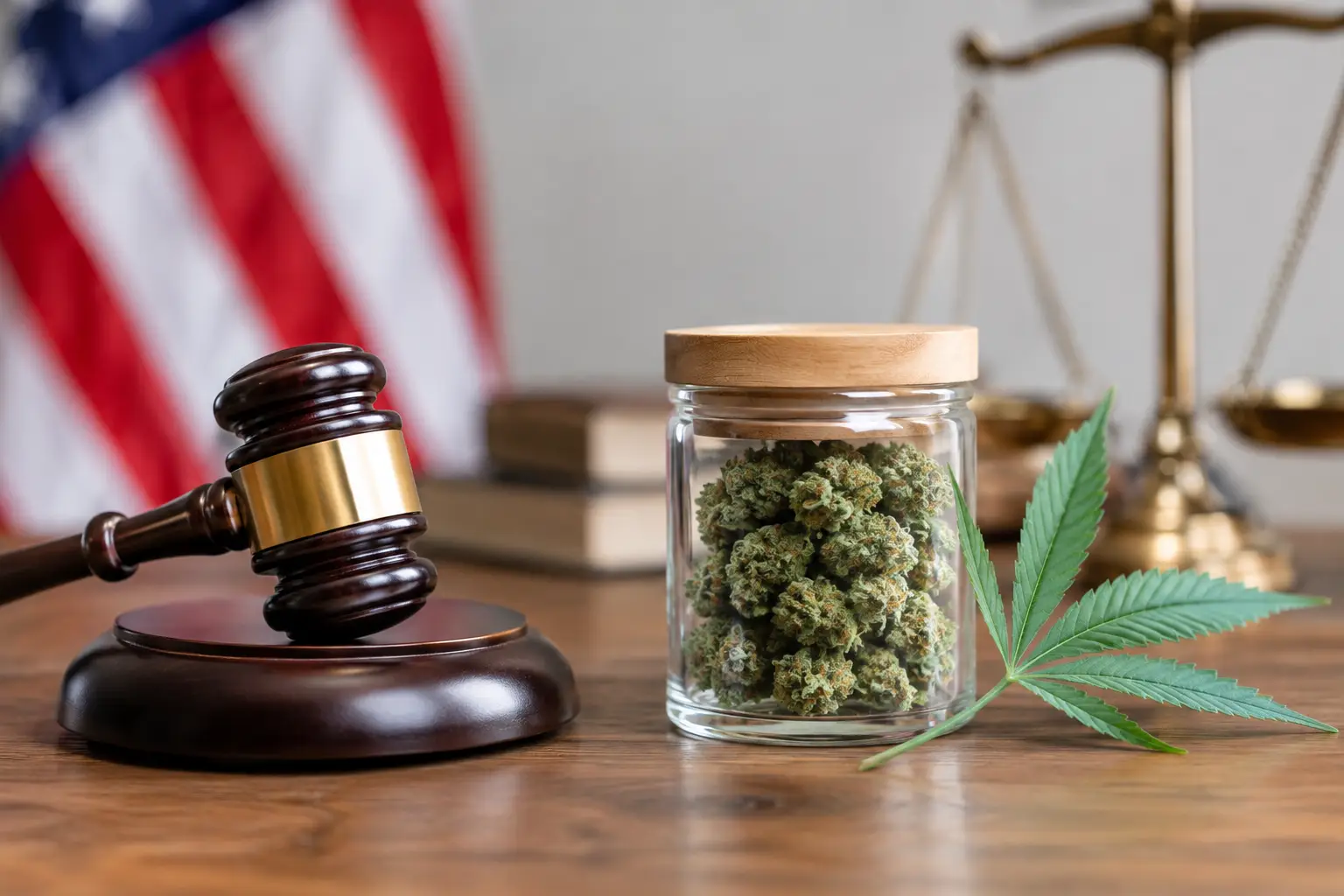
A federal cannabis headline can sound like a legal finish line when it is really a change in classification. So, what does cannabis rescheduling mean for people who use cannabis, operate cannabis businesses, or simply want the rules explained plainly? It means the federal government could move marijuana to a different category under the Controlled Substances Act. That would be consequential, but it would not make cannabis federally legal in the way alcohol is legal.
The distinction matters because cannabis policy operates on two tracks. States decide whether adults can buy, possess, grow, or use cannabis under state law. The federal government sets its own rules, and those rules still shape research, taxes, banking, employment policies, interstate commerce, and medical product approvals.
What does cannabis rescheduling mean under federal law?
The Controlled Substances Act sorts drugs into five schedules. A substance's schedule is meant to reflect its accepted medical use, potential for misuse, and risk of dependence. Marijuana has long been listed in Schedule I, alongside substances the federal government says have no currently accepted medical use and a high potential for abuse.
Rescheduling marijuana to Schedule III would place it in a category that includes substances with accepted medical uses and a lower to moderate potential for physical or psychological dependence compared with Schedule I or II drugs. Schedule III already includes certain products containing codeine, ketamine, and anabolic steroids.
That change would acknowledge a meaningful shift in federal policy. It would not mean every cannabis product has been approved as medicine, nor would it erase federal controls around marijuana. A Schedule III substance remains regulated. Manufacturing, distribution, recordkeeping, prescribing, and research are all subject to federal rules.
Just as important: a recommendation, proposal, or agency hearing is not the same thing as a final rescheduling rule. Federal agencies must follow a formal rulemaking process, which can include public comments, administrative proceedings, and legal challenges. When reading a headline, look for whether the change is proposed, pending, stayed, or final.
Rescheduling is not federal legalization
This is the point most likely to get lost in social posts and breathless headlines. Rescheduling would not automatically allow adults to buy marijuana anywhere in the country. It would not create a nationwide retail market, permit interstate cannabis shipping, or require states to legalize adult-use or medical cannabis.
State laws would continue to control what is permitted within each state, and they vary widely. In one state, an adult 21 or older may be able to purchase regulated cannabis from a licensed dispensary. In another, possession can still lead to criminal penalties. Federal rescheduling does not override those differences.
It also would not automatically clear past convictions, restore firearm rights, change workplace drug-testing rules, or solve every immigration consequence connected to cannabis. Those outcomes require separate laws, regulations, court decisions, or agency policies.
For consumers, the practical rule remains straightforward: follow the law where you are, not the law you wish applied. Do not transport cannabis across state lines, including between two states where adult-use cannabis is legal. Crossing a state border can trigger federal jurisdiction.
The business impact could be immediate, especially on taxes
For licensed cannabis operators, the largest near-term effect of a final move to Schedule III could involve Internal Revenue Code Section 280E. This provision generally prevents businesses trafficking in Schedule I or II controlled substances from deducting ordinary business expenses from federal taxable income.
That has created an unusually high tax burden for many state-licensed cannabis companies. Rent, payroll, marketing, insurance, and other normal costs may not be deductible in the same way they are for most businesses. If marijuana is no longer Schedule I or II, 280E would generally no longer apply to cannabis businesses because of marijuana's schedule alone.
That does not mean every operator would suddenly become profitable. Cannabis companies still face steep state taxes, local licensing fees, price compression, compliance costs, and limited access to capital. But relief from 280E could materially improve cash flow, particularly for businesses that have remained compliant through years of thin margins.
Banking may improve at the margins, but rescheduling is not a guaranteed banking fix. Financial institutions still must manage anti-money-laundering requirements, state-by-state regulatory complexity, and the mismatch between state-legal activity and federal enforcement risk. Comprehensive cannabis banking reform would require clearer legislation or regulatory action beyond a scheduling change.
Research could become more practical, not instantly easy
Cannabis research has been constrained by Schedule I requirements, including registration burdens and limitations that can make it difficult to study products that resemble what consumers actually buy in legal state markets. A Schedule III classification could reduce some administrative barriers and make research more accessible to more institutions.
That matters because many common cannabis claims still outpace the evidence. There is credible research supporting certain cannabinoid-based medicines for specific conditions, including some seizure disorders, chemotherapy-related nausea, and spasticity in multiple sclerosis. Evidence for many other uses, such as anxiety, insomnia, chronic pain, or post-workout recovery, is more mixed and depends on the product, dose, route of use, and person.
More research could help answer basic but consequential questions: Which ratios of THC and CBD are useful for particular symptoms? How do inhaled products compare with edibles or tinctures? What are the long-term risks for frequent users? Which terpenes, aromatic compounds found in cannabis, meaningfully affect an experience, and which marketing claims are ahead of the science?
Better research does not guarantee better answers overnight. Clinical trials take time, funding, standardized products, and careful participant protections. Still, rescheduling could make the path less restrictive.
Would doctors be able to prescribe cannabis?
Not in the simple way many people imagine. A state medical cannabis card is not the same as a federal prescription. In most state medical programs, clinicians certify or recommend that a patient may qualify under state law. Dispensary products are not automatically FDA-approved medications, and clinicians generally do not write conventional prescriptions for state-legal marijuana.
A Schedule III designation would not automatically turn dispensary flower, vapes, gummies, or concentrates into prescription drugs. For a product to be prescribed and marketed as a medicine under federal law, it generally must meet FDA standards for safety, effectiveness, quality, labeling, and manufacturing.
There are already FDA-approved cannabinoid medicines, including one derived from cannabidiol, or CBD, and synthetic cannabinoid products used for specific indications. Their existence shows the difference between an approved drug and the broader state-regulated cannabis marketplace.
Patients should be cautious about interpreting rescheduling as medical validation for every product or condition. If you use cannabis for symptom management, talk with a qualified health professional about interactions, especially if you take sedatives, blood thinners, seizure medications, or drugs that affect mood. Cannabis can impair driving and decision-making, and THC may worsen anxiety or trigger distressing effects for some people.
What rescheduling could mean for consumers
For the average adult consumer, the first changes may be less visible than the headlines suggest. Your state's age limits, possession limits, public-use rules, driving laws, and dispensary regulations are likely to remain the rules that shape everyday decisions.
Over time, a changed federal classification could support more research, more standardized information, and a healthier business environment for compliant operators. It may also strengthen the case for additional federal reforms. But product quality will still depend on the rules and testing systems in your state, and a Schedule III label would not make every THC product safe for every person.
That is especially relevant for hemp-derived intoxicating products. Rescheduling marijuana does not, by itself, settle the regulatory questions around hemp-derived delta-8 THC, converted cannabinoids, or products sold outside state cannabis programs. Those products remain subject to a separate and evolving mix of federal and state rules.
If you choose to use cannabis where it is legal, buy from regulated sources when available, check the product's THC potency, and start low and go slow with edibles. Keep cannabis secured away from children and pets, avoid mixing it with alcohol or other impairing substances, and never drive while impaired.
The real significance is what comes next
Cannabis rescheduling would be a major federal policy shift because it recognizes that the old Schedule I framework no longer fits the government's own assessment. Yet it is better understood as a new chapter than a final answer. Legalization, banking access, product regulation, public health research, criminal justice reform, and state-law conflicts each require their own solutions.
For now, the most useful approach is to read past the headline. Check whether a federal rule is actually final, follow your state's current law, and treat health claims with the same skepticism you would bring to any product that promises more than the evidence can support.