
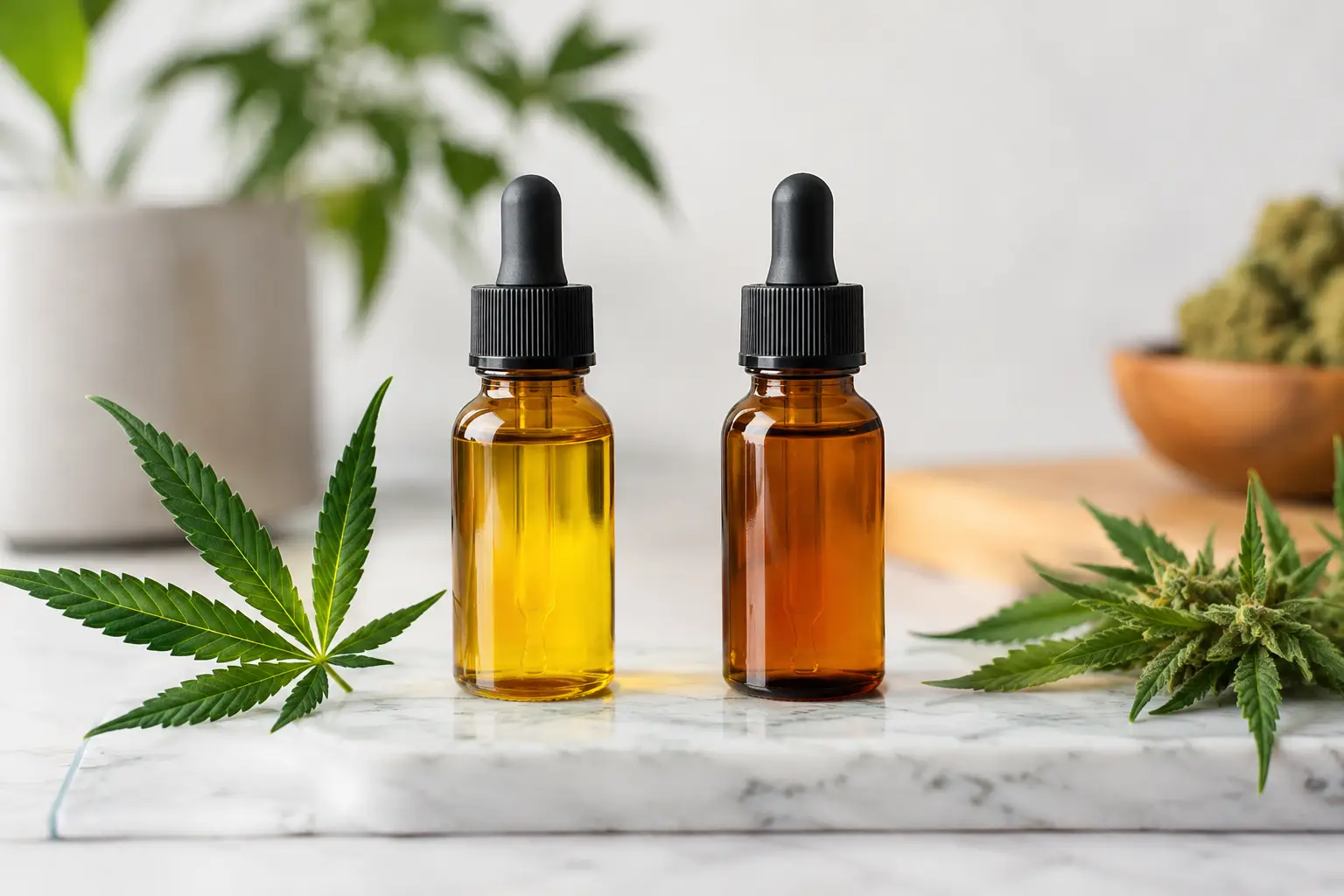
A cannabis label can make CBD and THC look like interchangeable ingredients with different percentages. They are not. CBD versus THC effects differ most clearly in whether a product causes intoxication, but the practical differences also extend to anxiety risk, sleep, medication interactions, drug testing, driving, and the legal rules that follow the product home.
For adults 21 and older, the useful starting point is simple: THC is the cannabinoid most associated with feeling high. CBD generally is not intoxicating. That distinction matters, but it does not make CBD automatically harmless or THC automatically a poor fit. Dose, product type, personal health history, and the other compounds in a cannabis product can all change the experience.
CBD versus THC effects at a glance
THC, short for delta-9-tetrahydrocannabinol, activates cannabinoid receptors in the brain strongly enough to alter perception, mood, coordination, and short-term memory. Depending on the dose and the person, that can feel relaxing, euphoric, creatively stimulating, sedating, or uncomfortable. Common unwanted effects include dry mouth, red eyes, faster heart rate, impaired coordination, anxiety, and paranoia.
CBD, or cannabidiol, interacts with the body differently. It does not produce the classic cannabis high, and it does not impair most people in the same obvious way THC can. Some users report feeling calmer or less tense, but subjective reports are not the same as settled clinical evidence. At higher doses, CBD can still cause fatigue, diarrhea, appetite changes, or a sense of sedation.
The phrase “non-intoxicating” can also be misunderstood. A CBD product may not make someone feel high, yet it can still affect alertness or interact with prescription medications. A product marketed as CBD may also contain measurable THC, particularly if it is full-spectrum or poorly made. The label alone is not a guarantee.
Why THC feels different
The body’s endocannabinoid system helps regulate functions including appetite, stress response, pain signaling, sleep, and memory. THC closely resembles one of the body’s own signaling molecules and binds to cannabinoid receptors, especially CB1 receptors concentrated in the brain. That is a major reason THC can change the way time, sound, food, and thought patterns feel.
Dose is the dividing line many consumers underestimate. A low dose of THC may feel manageable to an experienced user, while the same amount can be overwhelming for a beginner. With inhaled products, effects often begin within minutes and may last several hours. Edibles can take 30 minutes to two hours or longer to begin, then linger for six hours or more. Taking more because the first dose seems inactive is a common route to an unpleasant experience.
THC can be useful in medical contexts for some people under appropriate clinical guidance, but it can also worsen anxiety in others. People with a personal or family history of psychosis, bipolar disorder, or severe anxiety should be especially cautious and discuss cannabis with a qualified healthcare professional. Higher-potency THC products carry more risk of acute impairment and panic-like reactions.
Product format changes the equation
Smoking or vaping delivers cannabinoids quickly, which makes it easier to notice effects before taking more. It also comes with respiratory considerations, especially for smoked flower. Edibles are slower and less predictable because THC is processed through the digestive system and liver. The liver converts some THC into 11-hydroxy-THC, a metabolite that can feel stronger or more prolonged for many people.
Raw cannabis does not produce the same THC effects as heated cannabis. THCA, the acidic precursor found in fresh flower, converts into THC through decarboxylation - the heat-driven process that occurs when cannabis is smoked, vaped, or cooked. That chemistry is one reason a flower label and a finished edible label are not directly comparable.
What research says about CBD
CBD research is promising in some areas and preliminary in many others. The strongest established medical example is a prescription CBD medication approved for certain rare seizure disorders. That does not mean over-the-counter CBD gummies, oils, or beverages have been proven to treat epilepsy, anxiety, insomnia, pain, or inflammation.
Studies of CBD for anxiety, sleep, and pain are still limited by small sample sizes, varying doses, inconsistent formulations, and the challenge of separating CBD’s effect from expectation. Some people may find CBD useful as part of a wellness routine. Others may notice little or no change. A responsible claim is that evidence varies by condition, dose, and product, not that CBD works universally.
CBD also has a less glamorous but significant issue: drug interactions. It can affect liver enzymes involved in processing medications. That may alter levels of certain anti-seizure drugs, blood thinners, antidepressants, and other prescriptions. Anyone taking regular medication should ask a pharmacist or clinician before adding CBD, especially at higher doses.
The entourage effect is a theory, not a free pass
Cannabis products contain more than CBD and THC. They may include minor cannabinoids and aromatic compounds called terpenes. Terpenes contribute to scent and flavor, such as citrus, pine, or pepper notes, and they may influence how a product feels. Researchers are investigating whether these compounds work together in meaningful ways, often called the entourage effect.
That idea is worth studying, but it should not be treated as proof that full-spectrum products are always better. Full-spectrum CBD typically includes trace THC, while broad-spectrum CBD is intended to remove THC and isolate products contain CBD alone. Each format involves trade-offs. Full-spectrum products may appeal to people who want a wider cannabinoid profile, but they create a greater chance of THC exposure and a positive drug test.
Drug tests, driving, and daily responsibilities
CBD use is not a reliable way to avoid a positive THC drug test. Even hemp-derived products can contain up to 0.3% delta-9 THC by dry weight under the federal hemp definition, and the actual THC dose can add up with repeated use. Manufacturing errors and inaccurate labels add another layer of uncertainty. If employment, probation, athletics, or another obligation requires THC-free testing, avoiding products with any THC is the lower-risk choice, though no consumer product can offer absolute certainty.
THC and driving do not mix. Feeling calm, familiar with cannabis, or “not that high” does not restore reaction time, attention, or coordination. Do not drive, operate machinery, or make safety-sensitive decisions while intoxicated. For CBD, use caution the first time as well, particularly if the product causes drowsiness or is combined with alcohol, sedatives, or other substances.
Store all cannabis and hemp products securely, out of reach of children and pets. Edibles can look and taste like ordinary candy, which makes accidental ingestion a real household risk.
Legal status depends on more than the label
Federal and state cannabis rules do not line up neatly. Hemp-derived CBD is federally legal under specific conditions, but states can restrict products, ingredients, and sales. Marijuana-derived THC remains federally illegal, even though many states allow medical or adult-use cannabis under state law. Rules for hemp-derived intoxicating cannabinoids, including delta-8 THC, can change quickly and vary sharply by state.
A product’s source does not erase its effects. Hemp-derived delta-9 THC can still be intoxicating. So can delta-8 THC, despite different marketing language. Consumers should check current state rules, buy from regulated sources where available, and look for product-specific testing information that shows cannabinoid content and screens for contaminants such as pesticides, heavy metals, and residual solvents.
Choosing based on the effect you want to avoid
For many adults, the best decision is guided less by promised benefits than by acceptable risk. If avoiding intoxication, impaired driving, and THC-related job consequences is the priority, CBD-only products from reputable, independently tested manufacturers may be the more practical category, while still requiring attention to medication interactions. If a person is considering THC, starting with a low dose and allowing enough time before taking more can reduce the chance of an unexpectedly intense experience.
Neither cannabinoid is a substitute for medical care, and neither label can predict an individual response. The better question is not whether CBD or THC is “better.” It is which effects, risks, and legal constraints fit your situation - and whether the evidence supports using either one at all.