
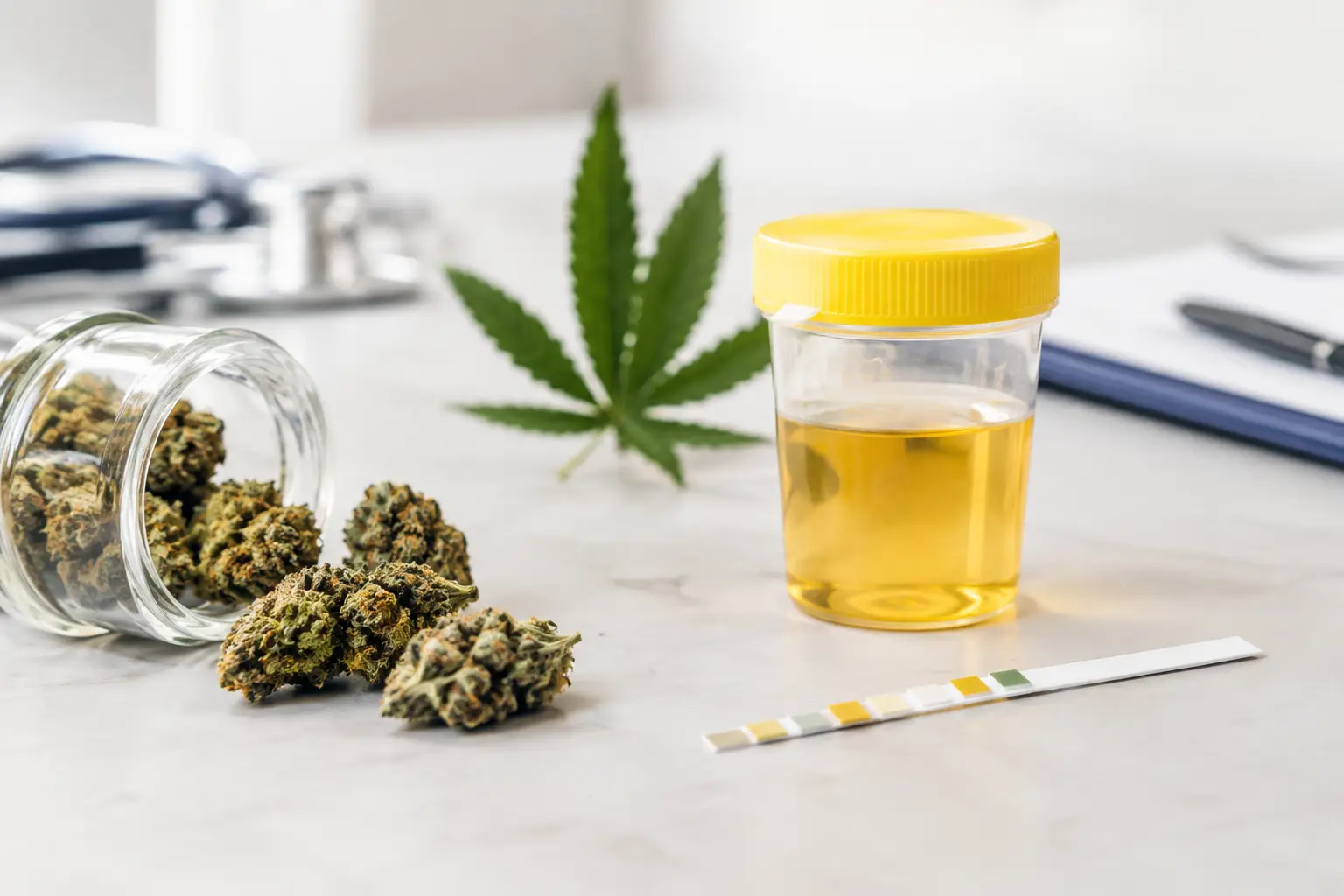
A negative cannabis drug test is not something anyone can responsibly promise from a calendar, a detox drink, or a few days of abstinence. Cannabis drug test detection depends on what kind of test is used, how often a person uses THC, the cutoff level, and the biology of the individual being tested. It also depends on a distinction that causes plenty of confusion: a test may detect evidence of prior exposure long after a person is no longer impaired.
That gap matters for employees, job applicants, patients, and anyone trying to make informed decisions in a changing legal landscape. State cannabis laws and workplace protections have expanded in some places, but federal rules and many employer policies still treat a positive result seriously. This is educational information, not legal or medical advice.
Cannabis drug test detection is not one timeline
Most routine drug tests do not look for active THC itself. They look for metabolites, which are compounds the body produces as it breaks THC down. The best-known urine marker is THC-COOH. Because THC and some of its metabolites are fat-soluble, metabolites can remain measurable after the immediate effects have worn off.
That is why the question, “How long does cannabis stay in your system?” does not have a single useful answer. A one-time consumer who takes a small dose may have a very different result from a daily consumer using high-potency flower, vapes, or edibles. Two people with similar use patterns can also test differently.
A detection window is an estimate, not a deadline. Test sensitivity, laboratory procedures, hydration, metabolism, body composition, route of use, dose, and time since last use all affect the result. In practice, frequency of use and the testing method usually carry more weight than popular online advice suggests.
The test type changes what can be detected
Urine testing
Urine testing is common in workplace screening because it is relatively inexpensive and can identify prior cannabis exposure over a longer period than blood or saliva testing. For occasional use, detection may be brief, often measured in days. With frequent or heavy use, metabolites may be detectable for weeks and sometimes longer. There is no reliable universal number of days.
Urine results can be especially hard to interpret as evidence of impairment. A positive urine test generally indicates that a metabolite exceeded the test's cutoff. It does not establish when cannabis was used, how much was consumed, or whether the person was impaired while working or driving.
Oral fluid testing
Oral fluid, often called saliva testing, tends to focus on more recent use than urine testing. Its window is typically shorter, though it varies with the collection device, cutoff, product type, and use pattern. Cannabis smoke or vapor can leave residues in the mouth, which is one reason recent inhaled use can be more readily detected through this method.
For employers trying to assess relatively recent exposure, oral fluid may offer different information from urine. It still should not be treated as a precise clock for impairment.
Blood testing
Blood tests are more closely associated with recent exposure because active THC levels fall relatively quickly after use. But “more closely associated” is not the same as “proves impairment.” THC blood concentrations are affected by tolerance, route of administration, timing of collection, and individual physiology.
This is particularly relevant in impaired-driving cases, where state laws vary widely. Some states use specific THC thresholds, while others rely more heavily on observed impairment. Unlike alcohol, there is no broadly accepted blood THC number that maps neatly onto a person's ability to drive safely.
Hair testing
Hair testing can potentially reflect a much longer history of exposure, often up to about 90 days depending on the sample length and laboratory protocol. It is not well suited to identifying very recent use because hair takes time to grow out from the scalp. External contamination, cosmetic treatment, and testing methods can complicate interpretation.
Why frequency, dose, and product potency matter
A single low-dose edible and repeated daily use of high-THC concentrates should not be treated as equivalent exposures. THC dose can vary dramatically across products, and labeled milligrams do not always predict an identical individual response. Inhaled products reach the bloodstream quickly, while edibles are absorbed and metabolized differently, often producing longer-lasting subjective effects.
For detection, repeated use matters because metabolites may accumulate faster than the body clears them. Daily or near-daily consumers are therefore more likely to have a longer urine detection window than occasional consumers. Higher-potency products can add to total THC exposure, but the relationship is still not precise enough to calculate an exact testing date.
CBD products add another complication. Broad-spectrum and full-spectrum products may contain small amounts of THC, even when the consumer is not seeking an intoxicating effect. Hemp-derived delta-8 THC and other intoxicating hemp cannabinoids can also trigger a positive result for THC metabolites. A product's hemp origin does not mean it is invisible to a standard drug test.
What does not reliably change your result
The market is full of products that promise to cleanse, flush, or mask cannabis metabolites. Those claims deserve skepticism. There is no credible shortcut that reliably removes THC metabolites from the body on command.
Drinking excessive water shortly before a urine test does not erase metabolites. It may dilute a sample, but laboratories commonly check for dilution using measures such as creatinine and specific gravity. A dilute specimen can lead to a retest, an invalid result, or an employer response under its testing policy. Excessive water intake can also be medically dangerous.
Exercise is another commonly misunderstood tactic. Regular physical activity supports general health, but it is not a dependable way to control a test result. Because cannabinoids are associated with fat tissue, strenuous exercise close to testing is not a strategy to rely on. Neither are supplements, niacin products, synthetic urine, or adulterants. Tampering can have employment, legal, and health consequences.
The only dependable way to reduce the likelihood of detecting THC metabolites is time without additional THC exposure. Even then, no one can guarantee an outcome.
Workplace policy and the law can matter as much as the science
Cannabis may be legal for adult use or medical use in a state while an employer maintains a drug-free workplace policy. Federal contractors, transportation roles regulated by the Department of Transportation, and safety-sensitive positions can be subject to stricter requirements. Federal law still classifies cannabis as a controlled substance, even as federal policy and rescheduling discussions continue to evolve.
Some states restrict certain forms of pre-employment cannabis testing or offer protections for lawful off-duty use. Those protections often have exceptions for safety-sensitive roles, on-the-job impairment, federal requirements, and other circumstances. A medical cannabis card does not automatically override an employer's policy.
Before accepting a role or responding to a test request, read the employer's written policy and the rules that apply in your state. Ask whether the test is pre-employment, random, post-incident, return-to-duty, or based on reasonable suspicion. The context can affect both the test method and the consequences of a result.
Practical decisions before a test
If a test is scheduled, avoid relying on internet calculators or detox marketing. Confirm what type of test is being used if that information is available, review the employer's policy, and disclose prescriptions only through the appropriate medical review process when requested. Do not assume a recommendation for medical cannabis is treated like a conventional prescription under every workplace program.
If you believe a result is inaccurate, ask about the confirmation process. Initial screening tests may be followed by a more specific confirmatory laboratory method. Keep communication factual, follow deadlines, and consider qualified legal advice when employment, licensing, child custody, or criminal consequences may be involved.
Cannabis policy is changing faster than testing technology and workplace norms. The most useful approach is not to chase a magic detection window, but to understand what a test can actually show, what it cannot show, and which rules apply before the sample is collected.