
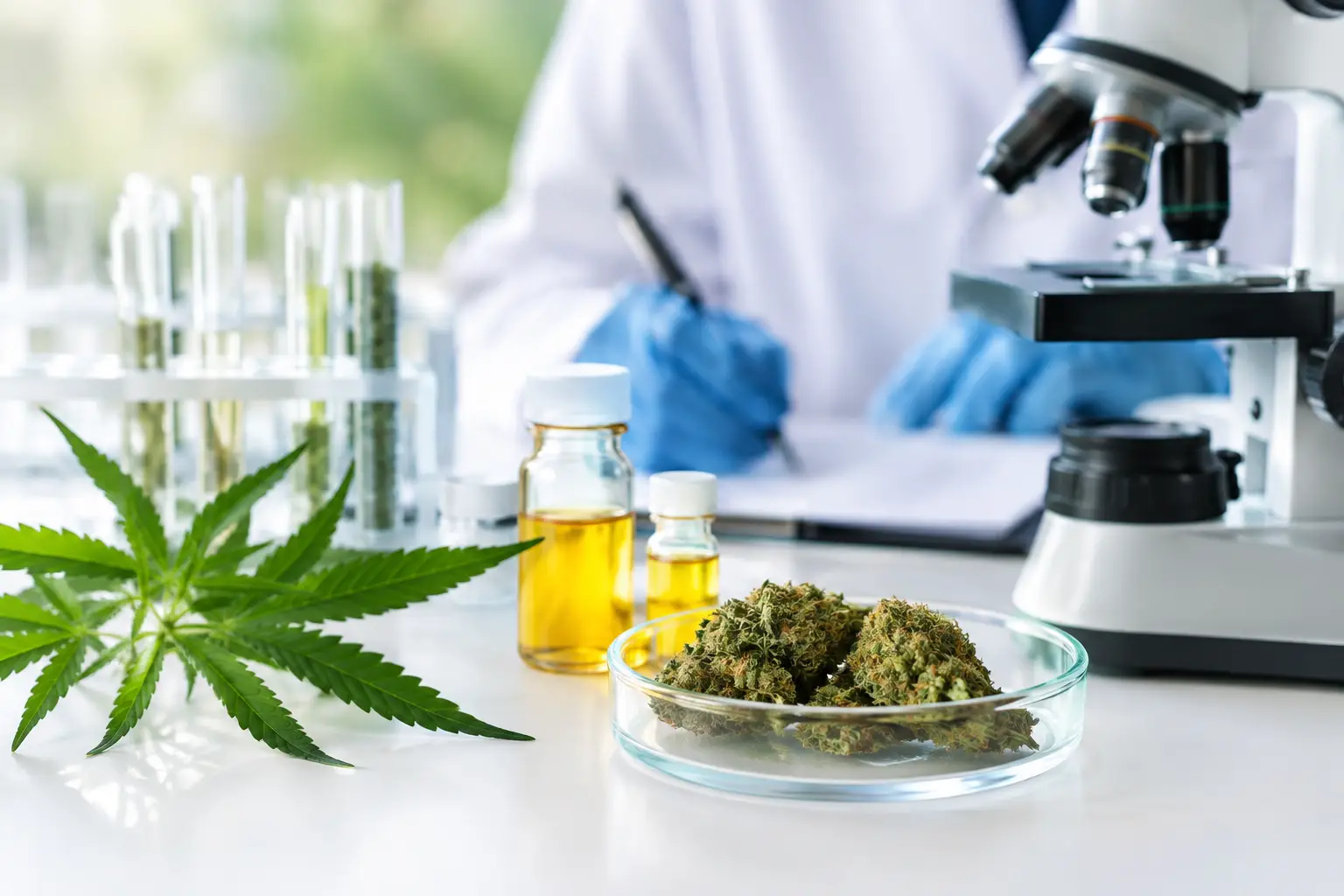
A headline says cannabis may help sleep. A dispensary menu describes a strain as calming. A friend reports that an edible changed their chronic pain routine. Each may contain a useful signal, but none is the same thing as proof. Cannabis research is most valuable when it helps separate a promising finding from a conclusion that goes further than the data.
That distinction matters because cannabis is not one substance, one dose, or one consumer experience. The plant contains many compounds, products vary widely, and state-regulated products are not studied under the same controlled conditions as a prescription drug. For US adults 21 and older, better research literacy can support more informed conversations with health professionals and more cautious consumer decisions.
Why cannabis studies can be hard to compare
Cannabis research faces challenges that are unusual even by medical-research standards. Federal controls have historically made it harder for researchers to obtain, store, and study cannabis products. That has limited the number of large, long-term clinical trials, particularly trials using products that resemble what consumers can buy in legal state markets.
The word “cannabis” also covers very different exposures. One study may examine purified CBD, or cannabidiol, at a measured oral dose. Another may look at inhaled THC, or delta-9-tetrahydrocannabinol, the primary intoxicating cannabinoid. A third may use a plant extract with multiple cannabinoids and terpenes, the aromatic compounds that contribute to smell and flavor. Those results cannot automatically be treated as interchangeable.
Route of administration changes the picture, too. Inhaled cannabis takes effect quickly and can be easier to titrate in the moment, but smoking introduces respiratory concerns. Edibles take longer to begin working and can have longer-lasting effects, which is one reason accidental overconsumption is common. Topicals, tinctures, capsules, beverages, and concentrates each create different questions about absorption, dose, onset, and safety.
Even the same labeled THC percentage does not guarantee the same experience. Product freshness, serving size, individual tolerance, metabolism, other medications, and setting can all matter. This is why a study of a standardized product may not predict what happens with a product bought elsewhere under a familiar strain name.
What cannabis research supports most clearly
The strongest evidence tends to come from well-designed human studies that test a specific preparation for a specific outcome. That level of clarity is more common for pharmaceutical cannabinoid products than for dispensary cannabis.
The FDA has approved certain cannabinoid-based prescription medicines for limited uses. For example, a purified prescription CBD medicine is approved for specific rare seizure disorders. Synthetic cannabinoid medicines have also been approved for particular nausea and appetite-related uses. These approvals matter because they reflect evidence on a defined product, dose, patient population, and manufacturing standard. They do not mean that all CBD products, all THC products, or cannabis flower have been proven to treat the same conditions.
For other questions, the evidence may be moderate, preliminary, mixed, or insufficient. Some research suggests certain cannabis-based medicines may help some people with chronic pain, chemotherapy-related nausea, or symptoms related to multiple sclerosis. Yet outcomes vary, benefits can be modest, and side effects may limit usefulness. A finding that a treatment helps a group on average does not tell every individual what result to expect.
Research is especially easy to overstate when a study finds an association. If frequent users report lower anxiety at one point in time, for example, that does not establish that cannabis caused lower anxiety. People may have chosen cannabis because of their symptoms, or other factors may explain the result. Controlled clinical trials are better suited to questions of cause and effect, though they still have limits.
How to read a cannabis study without getting lost
You do not need a science degree to spot the most consequential details. Start by asking what, exactly, was tested. A paper on 400 milligrams of purified CBD should not be used as a blanket claim about low-dose CBD gummies. A trial involving medically supervised vaporized cannabis should not be translated into a recommendation for high-potency concentrates.
Then look at the study design. Four questions provide a practical first screen:
- Was the research done in people, rather than cells or animals?
- Did it compare cannabis or a cannabinoid with a placebo, another treatment, or no treatment?
- How many participants were involved, and how long were they followed?
- Did researchers measure a meaningful outcome, such as fewer seizure episodes or improved daily functioning, rather than only a lab marker?
Small studies can be useful early evidence, but they are more vulnerable to chance findings. Short studies can identify immediate effects while missing longer-term concerns. Self-reported surveys can capture real consumer experiences, but memory, expectations, and selection bias can affect the results.
It also helps to check who funded the study and whether the authors describe conflicts of interest. Industry funding does not automatically invalidate research, just as public funding does not guarantee a perfect study. Transparency lets readers weigh the evidence with appropriate context.
Finally, pay attention to the conclusion language. Phrases such as “associated with,” “may improve,” and “warrants further study” are not evasions. They are often the most accurate description of what researchers know. When a headline turns that language into “proven to treat,” caution is warranted.
The missing information consumers often need
Many of the most practical questions remain under-researched. Consumers want to know whether a product will affect driving the next morning, interact with an antidepressant, worsen reflux, change sleep quality over months, or work differently for older adults. Those answers require larger and more diverse studies than the field has often been able to conduct.
Dose is another major gap. Labels may state milligrams of THC or CBD, but there is no universally appropriate dose for a broad goal like relaxation or sleep. High doses do not necessarily produce better results and can increase unwanted effects, including anxiety, impaired coordination, rapid heart rate, nausea, and next-day grogginess. THC can also impair judgment and driving ability.
There are higher-risk groups where general consumer advice is not enough. Cannabis may carry added concerns for people who are pregnant or breastfeeding; adolescents and young adults whose brains are still developing; people with a personal or family history of psychosis; and people taking medications that may interact with cannabinoids. Anyone managing a health condition or prescription regimen should bring cannabis use up with a qualified clinician, even if the conversation feels awkward.
Cannabis research and the regulation gap
A product can be legal in a state and still lack strong clinical evidence for a health claim. It can also be lab-tested for cannabinoid content while remaining different from the standardized product used in a clinical trial. Legal access, product quality, and medical evidence are related issues, but they are not the same thing.
Hemp-derived THC products add another layer of complexity. Their legal treatment and availability have shifted across federal and state policy, and labels may not always communicate intoxicating potential clearly. Consumers should check current state rules, avoid driving after use, keep products secured away from children and pets, and be cautious with unfamiliar serving sizes.
For edibles, the practical rule remains simple: start low, go slow. Wait long enough for the product to take effect before deciding whether to take more. Combining cannabis with alcohol or other impairing substances can increase risk, particularly when the dose and onset are uncertain.
What better evidence could change
More high-quality cannabis research would not simply produce more positive claims. It could identify which products do not help, which doses create unacceptable trade-offs, and which people face greater risks. That is progress, too.
The most useful future studies will reflect real-world questions while keeping scientific controls: defined product chemistry, transparent dosing, meaningful outcomes, diverse participants, and follow-up long enough to see both benefit and harm. They should also examine the products people are actually encountering, including high-potency THC formulations and hemp-derived intoxicants.
Until then, treat cannabis information the way a careful reporter treats an early lead: worth examining, not ready to publish as fact without confirmation. The best next step is often not finding a product with the boldest claim, but asking whether the evidence matches the product, the intended use, and the risks you are willing to take.